


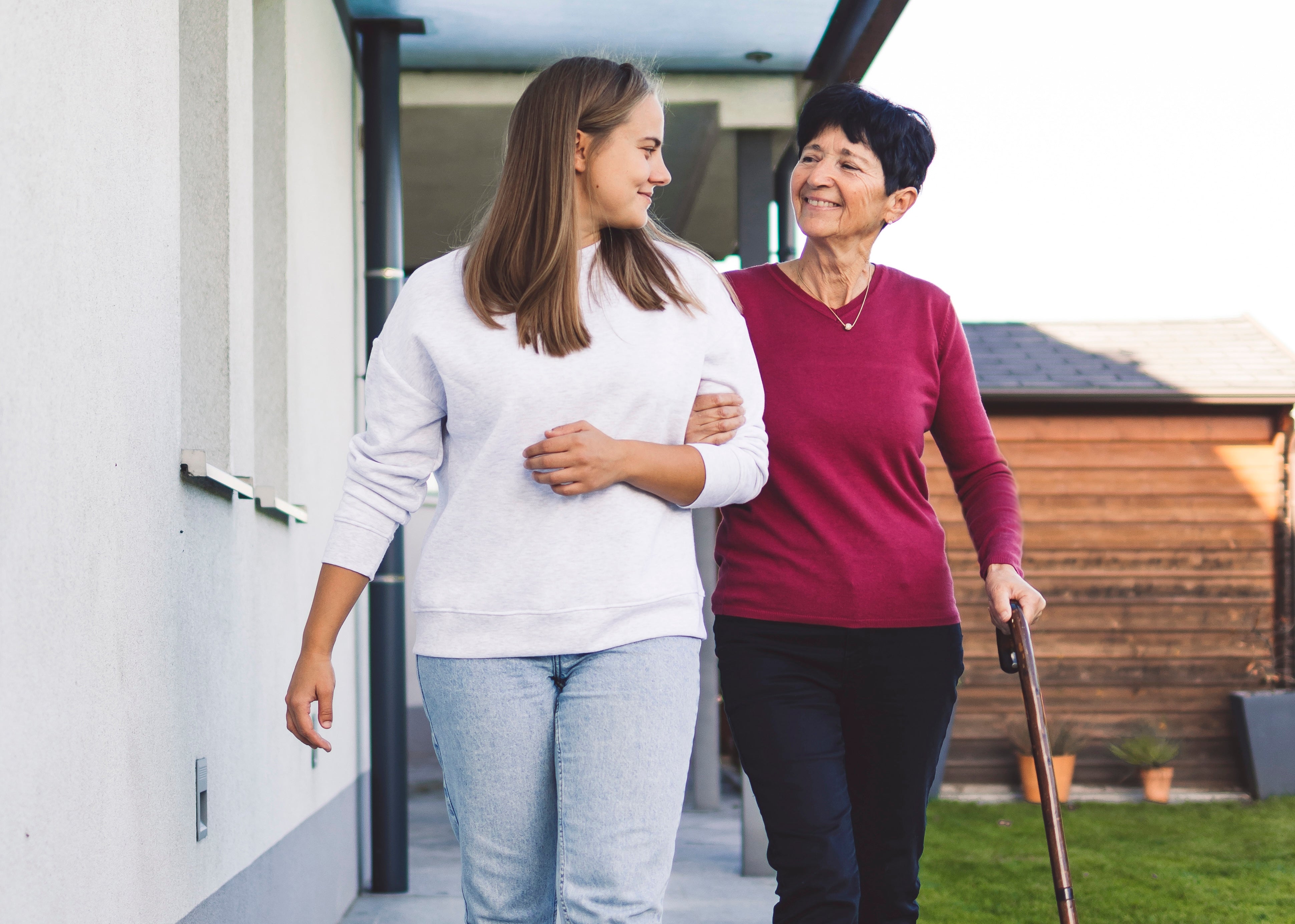
Falls happen to more than one in four older adults every year, making them one of the most common concerns families face as a loved one gets older. That concern often comes from a sense that falls strike without warning. In reality, they usually come down to a combination of identifiable factors. When you understand the different pieces that contribute to a fall, it becomes clearer where to focus your attention, without needing to watch over every single moment of your loved one's day.
Falls are almost always the result of more than one factor
Researchers describe falling as "multifactorial,” meaning it's rarely caused by a single issue. Falls occur when a mix of physical, medical, and environmental factors stack up. According to the CDC, some of the most common contributors include reduced strength and balance, certain medications, vision changes, and hazards in the home itself:
-
Strength and balance: Muscle strength and endurance naturally decline with age, which can make it harder to recover from a stumble that might once have been a non-event.
-
Medications: Taking several medications at once, particularly sedatives or drugs that affect alertness, is one of the most well-documented risk factors for falls. This is one of the more modifiable pieces, which is part of why medication reviews are often one of the first recommendations from a care team.
-
Vision: Reduced depth perception and contrast sensitivity make it harder to judge steps, curbs, and uneven surfaces, even in a home your loved one has lived in for years.
-
The home environment itself: Poor lighting, uneven flooring, and clutter are estimated to contribute to somewhere between 30 and 50 percent of falls among older adults. This is often the most overlooked factor, simply because a home that feels familiar doesn't always feel like it needs a second look.
Cognitive changes raise the risk of falling
For families supporting a loved one with dementia or another cognitive change, fall risk deserves a bit of extra attention. Research published in Alzheimer's & Dementia: The Journal of the Alzheimer's Association, examining data from National Health and Aging Trends Study (NHATS), by Safiyyah M. Okoye (Drexel University) and Jennifer L. Wolff, PhD (Johns Hopkins Bloomberg School of Public Health), found that nearly half (45.5%) of older adults with dementia had experienced one or more falls, compared to less than one third (30.9%) of older adults without dementia.
Other research on dementia and falls has found that older adults with dementia fall two to three times more than cognitively healthy older adults, and 60–80% of people with dementia fall annually.
Some of this comes down to the same physical factors above. But cognitive changes can also affect how someone judges distance, remembers where furniture is, or recognizes a hazard in the moment, which is part of why home environment and routine matter just as much as physical health.
Some of this comes down to the same physical factors above. But cognitive impairment is also linked to reduced ability to judge distance, navigate familiar spaces, and recognize hazards in the moment, which is part of why home environment and routine matter just as much as physical health.
What helps prevent falls at home
None of this is about achieving a perfectly risk-free home. That isn't realistic, and chasing it would be exhausting for everyone. What tends to make a real difference is a combination of a few manageable things:
-
A home safety walk-through, ideally with an occupational therapist, to spot hazards that are easy to miss day to day
-
A periodic review of medications with a doctor or pharmacist
-
Regular movement, even gentle, consistent activity supports strength and balance over time
-
Attention to lighting, especially in spaces used at night
-
Vision and hearing check-ins, since both are closely tied to balance
The most reassuring thing to know is that falls come down to small, ordinary factors. Those are the kind that are very possible to notice and work with once you know where to look. A little attention in the right places, like better lighting, a medication check-in, or a walk-through with fresh eyes, goes a long way toward a home that feels both familiar and safe.
This is something we think about a lot at Idem, too. A lot of falls happen in ordinary, easy-to-miss moments, like getting up in the dark for a glass of water or a trip to the bathroom, and that's part of what we're working on with our upcoming Guide Light and Smart Sensors. We’ll share more as we get ready to launch!
Share:
Keeping Video Calls Accessible Throughout Your Loved One's Journey with Dementia
Understanding early dementia: Signs worth noticing, the diagnosis process, and what comes after