


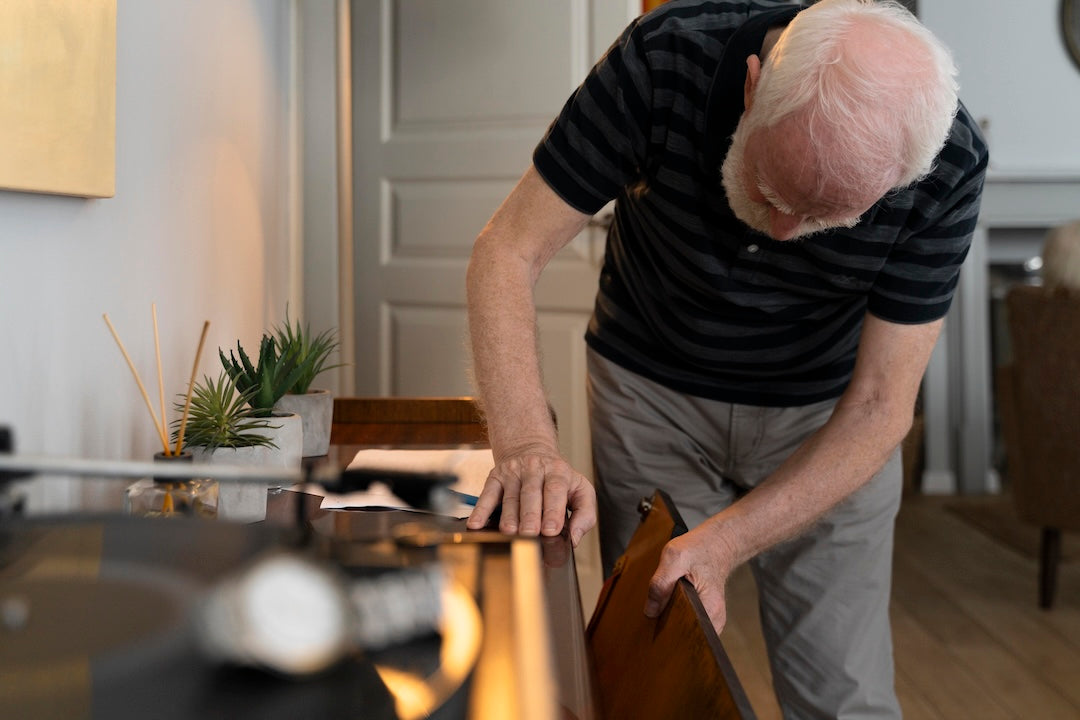
Dementia is usually talked about in terms of memory. Yet for many families, the first changes they notice at home have less to do with forgetting. Your loved one might pause at the top of the stairs a moment longer than usual, or run a bath that’s hotter than they’d like. Or, a short walk back from the mailbox might take a little more thought.
Understanding the reason behind these shifts can make them feel less puzzling, and point you toward practical solutions that can help support your loved one. For example, that pause on the stairs might come from changes in depth perception. Brighter lighting and a handrail in a contrasting colour can make each step clearer to see.
This article looks at how cognitive changes can shape everyday safety, and how caregivers can adapt with thoughtful modifications within their loved one’s home that respect their independence.
A shared experience around the world
According to the World Health Organization, more than 57 million people are living with dementia worldwide, with nearly 10 million new cases each year.
Behind those numbers are millions of families working through the same questions you may be asking now. Every person’s experience of dementia is their own, yet researchers have found common threads in how it shapes everyday life at home. Below, we walk through:
-
How different forms of dementia can affect safety in different ways
-
How changes in vision and perception can affect moving around the home
-
What research says about balance, movement, and falls
-
Why hot water and familiar appliances may need a second look
-
What to do when your loved one doesn’t notice the changes you do
-
Practical first steps for families
How different forms of dementia can affect safety in different ways
Dementia is an umbrella term for a group of symptoms caused by different changes in the brain. Alzheimer’s is the most common form, accounting for an estimated 60 to 70% of cases. Each form tends to affect different areas of the brain first, which shapes which everyday abilities change early on.
-
Alzheimer’s most often begins with difficulty remembering newly learned information, since the changes typically start in the part of the brain that affects learning. It may become harder to keep track of whether the stove was turned off or a medication was already taken.
-
Lewy body dementia can change an older adult’s visual-spatial perception, meaning how the brain judges space, distance, depth, and where objects are in relation to their own body. This might look like reaching for a cup and missing it, or misjudging the edge of a doorway. Alertness and attention may also shift noticeably, so your loved one may be clear and steady one hour, and less so the next.
-
Vascular dementia can make it harder to plan, organize, and make decisions. It may also bring a slower walk and less steady balance. Following a familiar recipe step by step may take more effort, and getting up from a low chair may call for a steadier handhold. These changes often progress in stages, with periods of decline followed by temporary stability before further shifts occur.
-
Frontotemporal dementia often affects personality, behaviour, speech, and judgment before memory. At home, your loved one may find it harder to recognize potential risks, such as being overly familiar with strangers or inviting them inside.
If you know which form of dementia your loved one is living with, it can help you and their care team anticipate what kind of support may be useful. And if you don’t know yet, paying attention to the changes you notice is a caring first step.
How changes in vision and perception can affect moving around the home
Seeing depends on both the eyes and the brain. The eyes take in light, and the brain turns it into a sense of shape, colour, distance, and depth. Dementia can affect that second step, so the eyes may be healthy while the brain has a harder time interpreting what they see. Researchers call these visual-perceptual or visuospatial changes, which can include:
-
Misjudging distance: Difficulty assessing object distances is recognized as an early sign of dementia.
-
Reduced contrast sensitivity: Differentiating between similar color shades can become increasingly difficult. These visual shifts raise the risk of falls and complicate everyday routines. For instance, distinguishing a white toilet against a matching wall or spotting a light-colored step on a pale floor can prove challenging.
-
Depth perception and light: Changes in depth perception are common, and transitions between different lighting levels can cause disorientation, such as moving from a bright room into a dim hallway.
-
Surfaces that look like something else: Dark-coloured bath mats can be perceived as a hole in the floor, making a lighter, plain mat a safer alternative.
That is why recommendations for home safety frequently focus on lighting, floor clarity, and colour contrast. Making a few tweaks can help your loved one in interpreting their environment more clearly:
-
Keep lighting bright and even: Placing additional lamps in hallways, stairways, and entryways, along with night lights between the bedroom and bathroom, minimizes disorienting shadows and sudden light changes.
-
Use colour to make things stand out: Selecting grab bars, stair railings, or toilet seats in a contrasting shade relative to the wall makes them stand out and quicker to find and reach for.
-
Choose plain floors where you can: Opting for plain, matte flooring can help ground every step, as bold stripes or busy patterns may make a surface look uneven or deeper than it is.
What research says about balance, movement, and falls
Higher fall risks among older adults living with dementia often stem from a combination of changes in gait, balance, and visual processing, alongside physical environmental hazards such as cluttered walkways or dim lighting. Identifying how these factors interact helps families focus on the most impactful safety improvements.
According to research, nearly half (45.5%) of seniors with dementia experience at least one fall annually, compared to 30.9% of those living without cognitive decline. Experts emphasize that evaluating a person’s home and neighbourhood, alongside their physical capabilities and overall health, is crucial for effective fall prevention.
For older adults, eliminating environmental hazards can decrease falls by approximately 26% overall, and up to 38% for individuals at elevated risk. These figures highlight the clear benefits of improving home lighting, floor surfaces, and pathway accessibility.
Physical well-being and movement play an equally vital role. Staying physically active and keeping blood pressure stable when standing can help older adults with dementia maintain a lower risk of falling. Because studies on dementia-focused exercise routines are still evolving, collaborating with a physiotherapist to adapt exercises to your loved one's abilities is often the most effective approach.
Here are practical ways to encourage daily mobility and create a safer home environment:
-
Clear common pathways: Walk through the paths they use most often, such as from the bed to the bath or the kitchen to their favorite armchair, and remove any trip hazards along the way.
-
Schedule a fall risk evaluation: Have a healthcare provider or physiotherapist assess your loved one’s gait, strength, and overall balance.
-
Discuss lightheadedness with a doctor: Tell their physician if they experience dizziness when standing up, as this may indicate postural blood pressure drops that can be addressed.
-
Review medications: Consult a doctor or pharmacist to ensure their prescriptions aren't contributing to alertness issues or instability.
-
Stay active together: Enjoyable, shared routines like daily walks, light gardening, or dancing around the kitchen help build strength while spending meaningful time together.
These simple, thoughtful adjustments empower your loved one to move around with confidence, keeping them safe and supported throughout the day.
Why hot water and familiar appliances may need a second look
Everyday routines like turning on the tap or using the stove are things your loved one has likely done thousands of times without a second thought. With time, however, these tasks may require a little more care. Older adults living with dementia might experience difficulty distinguishing hot from cold water or forget how to use familiar household appliances. A few simple safety measures can help them maintain their independence and comfortably enjoy daily activities like brewing tea or taking a warm bath:
-
Water temperature control: Setting the water heater to a lower temperature or installing a temperature-display thermometer helps prevent burns at the tap and in the tub.
-
Stove safety measures: Using protective knob covers, detaching the control knobs, or turning off the gas when the stove isn’t in use add a layer of reassurance. Alternatively, consider automatic stove shut-off devices that cut power to the stove when needed.
-
Auto-shutoff appliances: Opt for kettles and countertop devices equipped with automatic shut-off features so they power down safely if left unattended.
Anosognosia, or when your loved one doesn’t notice the changes you do
Sometimes, your loved one may not be aware of the changes in themselves that you are noticing. This can be a sign of anosognosia, a symptom where dementia affects the brain’s ability to recognize changes in one’s own thinking and abilities. Although it is most frequently seen in later stages, it can also manifest earlier, such as in frontotemporal dementia or mild cognitive impairment.
Recognizing this dynamic can change how you navigate safety conversations. When a loved one does not perceive risks with everyday tasks like navigating stairs or using the stove, that reaction is a direct manifestation of anosognosia. Repeatedly explaining the same concern often leads to mutual frustration. The Alzheimer’s Association suggests approaching these moments with empathy and prioritizing support that honours how your loved one perceives their own capabilities.
To help navigate these conversations together, consider these gentle strategies:
-
Align with their priorities: Frame adjustments around personal comfort or something they enjoy, such as placing a brighter reading lamp beside their favourite chair.
-
Provide meaningful choices: Involve your loved one in decision-making by offering simple selections, like choosing between two night light styles or grab bar designs.
-
Involve a trusted professional: Guidance or observations coming from an occupational therapist or doctor often feel more objective than feedback from family members.
Practical first steps for families and caregivers
While changes in awareness, vision, and balance present distinct challenges to home safety, many of the most helpful solutions build on the same core principles. Here are a few pieces of advice that can help you support your loved one’s safety at home while preserving their dignity and independence:
-
Notice patterns over time: Isolated moments are rarely cause for alarm, but persistent shifts should be noted down and shared with a medical professional.
-
Optimize the living space: Enhancing lighting, increasing color contrast, and clearing walkways make staircases, thresholds, and doorways easier to navigate, which supports both depth perception and steadier movement around the home.
-
Request an occupational therapy home visit: An occupational therapist can perform a thorough home assessment and suggest personalized adaptations. Studies show home safety interventions are particularly effective when guided by an occupational therapist.
-
Prioritize open communication and inclusion: Introducing adjustments gradually and making decisions collaboratively ensures that those changes feel supportive rather than imposing.
-
Reach out to local support networks: Organizations like Alzheimer’s Disease International connect families to over 105 regional member associations for localized resources and assistance.
Every person experiences dementia differently. Recognizing the reasons behind the shifts you observe is a caring first step toward maintaining a home environment tailored to the life your loved one wishes to pursue.
This information is for educational purposes and does not replace medical advice. Please speak with a healthcare provider for guidance specific to your situation.
Sources
-
World Health Organization. “Dementia.” Fact sheet, 2026. who.int
-
Alzheimer’s Association. “What is Alzheimer’s disease?” alz.org
-
Alzheimer Society of Canada. “Lewy body dementia,” 2023; “Vascular dementia,” 2023; “Frontotemporal dementia,” 2024. alzheimer.ca
-
Northwestern University Mesulam Center for Cognitive Neurology and Alzheimer’s Disease. “Behavioral variant frontotemporal dementia.” brain.northwestern.edu
-
Marquié et al. “Visual impairment in aging and cognitive decline.” Scientific Reports, 2019. PubMed Central
-
Alzheimer’s Association. “Home safety.” alz.org
-
Alzheimer Society of Canada. “Living safely and independently.” alzheimer.ca
-
Alzheimer’s Society (U.K.). “Making your home dementia friendly.” Reviewed 2026. alzheimers.org.uk (PDF)
-
Okoye, S.M., Wolff, J.L., et al. “Predictors of falls in older adults with and without dementia.” Alzheimer’s & Dementia, 2023. Summary via Drexel University
-
Cochrane. “Environmental interventions for preventing falls in older people living in the community.” 2023. cochrane.org
-
Allan, L.M., et al. “Incidence and prediction of falls in dementia: A prospective study in older people.” PLOS ONE, 2009. journals.plos.org
-
Jehu et al. Systematic review of exercise interventions and falls in people living with dementia. Journal of Alzheimer’s Disease, 2023. SAGE Journals
-
Alzheimer’s Association. “Anosognosia.” alz.org
-
Gillespie, L.D., et al. “Interventions for preventing falls in older people living in the community.” Cochrane, 2012. cochrane.org
-
Alzheimer’s Disease International. “Our members.” alzint.org
Share:
Timing Matters: A Conversation About Early Dementia Diagnosis and the Value of Time